Home » Posts tagged 'substance abuse counselor' (Page 3)
Tag Archives: substance abuse counselor
Treating Substance Abuse/Addiction (Part II)
Contributor: Yvette McBride Thomas
Treating Illegal Drug Addiction
- Around half a million Americans are heroin addicts, and four million are regular users of marijuana.
- Treatment is often based on the AA model.
- Because of incarceration of illegal drug abusers, jail is the usual context for treatment.
- “Stay’n Out” is a prototype of a jail treatment program that works well and has a recidivism rate of only 25%.
Treating Families where there is Substance Abuse/Addiction
- Families either promote or enable substance abuse behaviors. The whole family has to be included in the treatment.
- Children with chemically dependent parents are at risk.
- Alcoholic families tend to be isolated and lack positive role models.
- Young people from dysfunctional families use substance abuse to
- Relieve stress and anxiety and structure time.
- Keep their minds off family dynamics and on predictable problematic behaviors.
- Substitute for sex and promote pseudo-individuation (a false sense of self).
Treatment Services
- Counselor can provide information.
- Counselor may have to be confrontational with the family over the effects of substance abuse on the family and individual. An intensive systems approach must be used that also involves agencies.
- Counselor can work to help family deal with feelings, such as anger and defense mechanisms.
- Counselors can also help the family take responsibility for their behaviors.
- Developmental issues are also worked on by the family.
Treating Women and Minority Cultural Groups in Substance Abuse
- Approximately five to seven million women abuse alcohol in the US alone.
- Women face societal rebuke and chastisement for alcohol abuse.
- Barriers to treatment include need for childcare, cost, family opposition, and inadequate diagnosis.
- Little evidence exists on the benefits of AA and NA on the one-third of the AA membership that women represent due to gender differences and cultural differences.
- “Women for Sobriety” is an alternative help group program that is based on a cognitive-behavior modification approach. Thinking is changed to overcome feelings of helplessness, powerlessness, guilt, and dependence.
- Cultural differences may play a part in the recovery process. Spiritual elements may be different for women and different ethnic backgrounds.
Affiliation, Certification, and Education of Substance Abuse Counselors
IC&RC
- The International Certification & Reciprocity Consortium.
- IC&RC’s credentials include
- Alcohol and Drug Counselor (ADC)
- Advanced Alcohol and Drug Counselor (AADC)
- Clinical Supervisor (CS)
- Prevention Specialist (PS)
- Certified Criminal Justice Addictions Professional (CCJP)
- Certified Co-Occurring Disorders Professional (CCDP)
- Certified Co-Occurring Disorders Professional Diplomate (CCDPD)
- The IC&RC is currently developing a Peer Mentor (PM) credential.
TCBAP
- Texas Certification Board of Addictions Professionals
• IAAOC
- International Association of Addictions and Offender Counseling
- Focuses on the prevention, treatment, and description of abusive and addictive behaviors.
- Publishes the Journal of Addictions & Offender Counseling
• NAADAC
- National Association of Alcoholism and Drug Abuse Counselors
- A national organization that certifies addiction counselors
• NBCC
- In 1994 the National Board of Certified Counselors added a certification process for becoming a substance abuse counselor.
Two types of counselors
- Recovering counselors
- Nonrecovering counselors
Reference:
Gladding, S.T. (2011). Counseling: A comprehensive profession (7th ed.). Upper Saddle, NJ: Pearson-Merrill.
Preventing Substance Abuse/Addiction
Contributor: Yvette McBride Thomas
Prevention Programs
“Just Say No”
- Sponsored by local governments and found in schools and public agencies.
- The program’s message is incorporated into public service announcements on television to influence preteens and teens by their peers to say “no” when offered a cigarette or other addictive or dangerous substance.
D.A.R.E.
- Drug Abuse Resistance Education
- Found in late elementary and early middle school grades
- Uses police as instructors and provides case scenarios that challenge fifth and sixth graders to think about and answer them.
S.A.D.D. and M.A.D.D.
- Students against Drunk Driving
- Mothers against Drunk Driving
- These associations help educate and orient young people about the hazards of drug abuse and the dangers of addiction
Tobacco and Cocaine Programs
- These programs focus on the external and internal factors important to teens. External factors
- External factors include: breath, teeth, clothes, and costs.
- Internal factors include: lifestyle choices, time management, and nutrition.
- Group pressure and dynamics are common elements in prevention.
- Adolescents who get involved in the use of drugs do so because of friends who use drugs.
- When a group perceives drugs as hazardous, its members are less likely to engage in the behavior.
- Educational and support groups are a valuable tool to help ward off abuse and addictive behaviors
Reference:
Gladding, S.T. (2011). Counseling: A comprehensive profession (7th ed.). Upper Saddle, NJ: Pearson-Merrill.
Drug Use in Today’s Society
- Drug use is taking an aspirin for a headache, or a single dose of cough syrup for a cough or a hit of acid.
- How the drug is taken has an effect on how the body reacts.
- How much and how often are points that make the difference between normal use and abuse.
- Four principles of psychoactive drugs:
- Drugs are not bad or good; they are not evil, they are a substance. By itself a drug
 cannot do anything until it enters a body. Some drugs help the body function when taken correctly but can cause harm when misused or abused.
 - Every drug has multiple effects. No part of the body works independently from the rest; all systems are connected. When a drug is taken it affects all parts of the body it passes through.
- Both size and the quality of the drug affect the effects of the drug. The better the quality, or the larger the dose the larger the response or the more severe the response.
- The effects of a drug depend on the person. Not only personality, but age, race, weight… all of them influence how the body takes in and responds to the drug.
- History tells us that humans have used, misused and abused some plants or substances for as long as humans have been around.
- Four pharmacological revolutions
- 19th century – vaccines. This is the first time drugs were used to help stop the number one killers at the time: communicable diseases. For the first time there were drugs that were powerful and have selective beneficial effects. This helped people have faith in medicine stopping illness.
- WWII – antibiotics. Not only did they help cure diseases but also helped prevent infection. This got us to the point that we are now; we expect to take something to fix everything.
- 1950’s – anti-psychotic drugs. This was the first time that drugs were used to treat psychotic disorders. This changed the way people saw and treated mental illness. We have new drugs that effect how we think, our emotions, and perceptions.
- Oral contraception – now we have control of our body through chemicals. Some drugs are not meant to treat anything but to control and change the way the body was meant to work.
- Then there were many social changes in the US: The Beatles, civil rights, Vietnam, LSD, etc. Drugs became more common and accepted.
- In 1971 Nixon declared the first “War on drugs”; yet during this time the legal drinking age was lowered and penalties for having marijuana were eased.
- In the 80’s tolerance lessened. The legal drinking age was raised to 21 again and penalties were stiffened on all drugs, including marijuana.
- Perception of the risk – when the perception of the risk is low the use is high and vice versa. This differs from perception of availability.
- Longitudinal studies are one way we have looked for antecedents of drug use.
- Evidence tells us not to do things but we do them anyways; from eating too much, driving too fast,drinking too much, texting while driving, and driving while intoxicated
- Cultural trends influence what drugs are being used.
Drug Use: An Overview – Slide show (recommended)
Drug Use as a Social Problem – Slide Show
Drugs, Society, and Human Behavior, by Carl Hart, Charles Ksir, and Oakley Ray
Drugs, Behavior, and Modern Society by Levinthal, C.
4. Service Coordination
Service coordination is the action that brings the client, treatment services, and community resources together in order to address issues and needs identified in the treatment plan. It includes case management and client advocacy; all of this to enable the client to achieve specified goals.
Services coordination includes these three main activities:
- Implementing the Treatment Plan
- Consulting
- Continuing Assessment and Treatment Planning
Implementing the Treatment Plan
Our goals in this area are:
- To initiate collaboration with the referral sources.
- To obtain, review, and interpret information from screening and assessment processes.
- To make sure that our client is eligible for admission into specific treatment.
- To assess readiness for treatment and change.
- To complete necessary administrative procedures for admission to treatment.
- To establish accurate treatment and recovery goals with the client, making sure the family is also involved. Things to discuss with our client and his/her family are:
- Nature of services
- Program goals
- Procedures
- Rules of conduct
- Schedule of treatment activities
- Cost of treatment
- Duration of care
- Client’s rights and responsibilities
- Effects of treatment and recovery on client and significant others
Consulting
Our main goal here is to continuously evaluate our client’s recovery process and the problems interfering with this progress, always considering the client’s background and treatment plan. This action will provide us, the counselors, with good feedback to adjust the treatment. Our main responsibilities are:
- To be familiar with methods for assessing the client’s past and present biopsychosocial status.
- To understand the terminology, procedures, and functions of other disciplines related to the treatment of substance abuse disorders.
- To collaborate as part of a multidisciplinary treatment team.
- To maintain confidentiality and respect regulations.
- To establish and maintain nonjudgmental relationships with clients and service providers.
Continuing Assessment and Treatment Planning
We are responsible for maintaining an ongoing contact with client and involved significant other to make sure they are following the treatment as planned. Although we cannot make the client do anything, including staying in treatment, we can still try to engage the client and significant others in the treatment process. Therefore, we need to:
- Understand the stages of change
- Assess treatment and recovery progress in consultation with our client and significant others
- Make appropriate modifications to the treatment plan
- Describe and document the treatment process, progress, and outcomes accurately
- Engage the client and significant others with continuing care
- Help the client develop a relapse prevention plan
- Address confrontation, conflict resolution, and problem-solving with the client
- Discuss discharge planning with the client and significant others.

2. Treatment Planning
This topic is important. It is part of both the 12 Core Functions and the 8 Practice Domains. I briefly mentioned it in a previous post, so you will find a lot of similarities. Here I go into more detail.
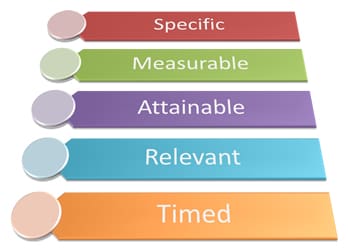
Treatment planning is a written document developed by the counselor and the client. They collaborate with each other to identify and prioritize problems needing resolution. Treatment planning involves determining important treatment goals; it describes measurable steps toward achieving those goals; and it represents an agreement between the counselor and the client.
A treatment plan is not a one-size-fits-all but an individualized document. It must address the identified substance use disorder, potential mental conditions, employment, education, spirituality, health, social, and legal issues as well as issues related to the progress of the treatment.
As I mentioned in previous posts, counselors need to be familiar with the stages of change and readiness for treatment, and be able to establish treatment priorities based on information from the assessment process.
During treatment planning, we should be able to:
- Explain assessment results to the client in an understandable manner.
- Identify and prioritize problems based on client’s needs.
- Formulate immediate and long-term goals using behavioral terms (book recommendation: Martin, Garry. “Behavior Modification: What it is and how to do it.” 9th ed.)
- Identify the treatment methods and resources to be used as appropriate for each client.
- Develop with the client a mutually acceptable treatment plan and method for monitoring and evaluating progress.
One of the main goals during treatment planning is to collaborate with the client and his/her significant others in order to establish a trusting relationship with them.
Consultation with Other Professionals in Regard to Client Treatment Services
Consultation with other professionals such as in-house staff and outside professionals is important in order to assure a comprehensive, competent care for the  client.
Global Criteria
- Recognize issues that are beyond the counselor’s knowledge and skills.
- Consult with appropriate resources in order to secure the provision of effective treatment services.
- Abide by applicable laws, regulations, and agency policies in regards to client’s confidentiality.
- Explain the rationale for the consultation to the client, if appropriate.
Miller, Geri. “Learning the Language of Addiction Counseling.” 2nd ed.
Report and Record Keeping
 Report and record keeping involves charting the results of assessments, treatment plan, writing reports, progress notes, discharge summaries, and other client-related data.
Global Criteria
- Prepare reports and relevant records. Integrate available information.
- Chart ongoing information in regards to the client.
- Use relevant information from records to monitor client’s care.
Miller, Geri. “Learning the Language of Addiction Counseling.” 2nd ed.
 LCDC Exam Review